„limits2vision“ Scientists play a key role in PANDORA – A New Marie Skłodowska-Curie Doctoral Network
New perspectives for understanding and treating age-related macular degeneration
Scientists from the limits2vision network are strongly involved in PANDORA, a new Marie Skłodowska-Curie Doctoral Network funded by the European Union. Coordinated by the Institute for Ophthalmic Research (Tübingen University Hospital and the University of Tübingen), PANDORA brings together leading academic, clinical, and industrial partners across Europe, with strong participation from the Institut de la Vision in Paris (Sorbonne Université).
The network once again highlights the strength and impact of French-German collaboration in vision research. Among the principal investigators involved in PANDORA are Dr. Angela Armento and Dr. Florian Sennlaub, who are also active members of the limits2vision network. In addition, Prof. Marius Ueffing and Prof. Simon Clark, both limits2vision principal investigators, are actively involved in the PANDORA Doctoral Network.
At the heart of PANDORA is a major societal and medical challenge: age-related macular degeneration (AMD), one of the leading causes of irreversible vision loss in older adults. Affecting around 200 million people worldwide, AMD can profoundly impair central vision, independence, mobility, and quality of life, while creating growing challenges for healthcare systems in ageing societies.
PANDORA combines cutting-edge research with advanced international training for the next generation of scientists. Eight academic institutions, three industry partners, and two non-profit organisations will work together to deepen our understanding of the mechanisms underlying AMD and to develop innovative therapeutic strategies. The network will train 13 doctoral researchers in an international, interdisciplinary, and highly collaborative environment, bridging fundamen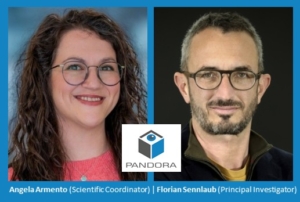 tal research and clinical translation.
“Our goal is to translate this knowledge into new therapeutic strategies that will ultimately benefit patients,” says Dr. Angela Armento, Scientific Coordinator of PANDORA.
The support of the Marie Skłodowska-Curie Actions not only strengthens European leadership in cutting-edge biomedical research, but also represents a major investment in the next generation of researchers and in tackling one of the most important health challenges of ageing societies.
The limits2vision community is proud to contribute to this new initiative and looks forward to joining forces with PANDORA to train and inspire the next generation of vision scientists.
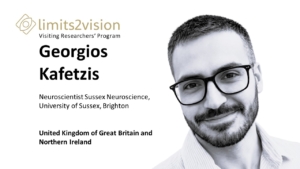 Within the field of sensory neuroscience, his work addresses fundamental questions about how neural circuits balance information processing, efficiency and biological constraints — questions that closely align with the scientific vision of limits2vision. By investigating retinal computation across species and evolutionary timescales, Georgios Kafetzis contributes to a deeper understanding of how the visual system has evolved to optimize information transmission under energetic and structural limitations.
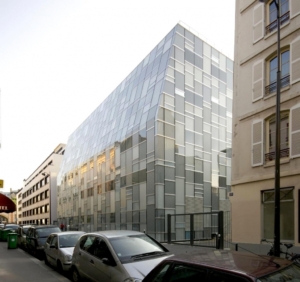 will also participate in the International Scientific Meeting “Understand, Preserve & Restore Vision”, taking place at the Institut de la Vision from 5–7 October 2026. Together, these events will provide valuable opportunities to connect research groups, exchange expertise, and foster new collaborations.