We may request cookies to be set on your device. We use cookies to let us know when you visit our websites, how you interact with us, to enrich your user experience, and to customize your relationship with our website.
Click on the different category headings to find out more. You can also change some of your preferences. Note that blocking some types of cookies may impact your experience on our websites and the services we are able to offer.
These cookies are strictly necessary to provide you with services available through our website and to use some of its features.
Because these cookies are strictly necessary to deliver the website, refusing them will have impact how our site functions. You always can block or delete cookies by changing your browser settings and force blocking all cookies on this website. But this will always prompt you to accept/refuse cookies when revisiting our site.
We fully respect if you want to refuse cookies but to avoid asking you again and again kindly allow us to store a cookie for that. You are free to opt out any time or opt in for other cookies to get a better experience. If you refuse cookies we will remove all set cookies in our domain.
We provide you with a list of stored cookies on your computer in our domain so you can check what we stored. Due to security reasons we are not able to show or modify cookies from other domains. You can check these in your browser security settings.
We also use different external services like Google Webfonts, Google Maps, and external Video providers. Since these providers may collect personal data like your IP address we allow you to block them here. Please be aware that this might heavily reduce the functionality and appearance of our site. Changes will take effect once you reload the page.
Google Webfont Settings:
Google Map Settings:
Google reCaptcha Settings:
Vimeo and Youtube video embeds:
You can read about our cookies and privacy settings in detail on our Privacy Policy Page.
Privacy
„limits2vision“ Scientists play a key role in PANDORA – A New Marie Skłodowska-Curie Doctoral Network
New perspectives for understanding and treating age-related macular degeneration
Scientists from the limits2vision network are strongly involved in PANDORA, a new Marie Skłodowska-Curie Doctoral Network funded by the European Union. Coordinated by the Institute for Ophthalmic Research (Tübingen University Hospital and the University of Tübingen), PANDORA brings together leading academic, clinical, and industrial partners across Europe, with strong participation from the Institut de la Vision in Paris (Sorbonne Université).
The network once again highlights the strength and impact of French-German collaboration in vision research. Among the principal investigators involved in PANDORA are Dr. Angela Armento and Dr. Florian Sennlaub, who are also active members of the limits2vision network. In addition, Prof. Marius Ueffing and Prof. Simon Clark, both limits2vision principal investigators, are actively involved in the PANDORA Doctoral Network.
At the heart of PANDORA is a major societal and medical challenge: age-related macular degeneration (AMD), one of the leading causes of irreversible vision loss in older adults. Affecting around 200 million people worldwide, AMD can profoundly impair central vision, independence, mobility, and quality of life, while creating growing challenges for healthcare systems in ageing societies.
PANDORA combines cutting-edge research with advanced international training for the next generation of scientists. Eight academic institutions, three industry partners, and two non-profit organisations will work together to deepen our understanding of the mechanisms underlying AMD and to develop innovative therapeutic strategies. The network will train 13 doctoral researchers in an international, interdisciplinary, and highly collaborative environment, bridging fundamen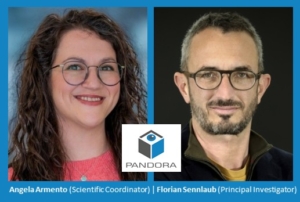 tal research and clinical translation.
“Our goal is to translate this knowledge into new therapeutic strategies that will ultimately benefit patients,” says Dr. Angela Armento, Scientific Coordinator of PANDORA.
The support of the Marie Skłodowska-Curie Actions not only strengthens European leadership in cutting-edge biomedical research, but also represents a major investment in the next generation of researchers and in tackling one of the most important health challenges of ageing societies.
The limits2vision community is proud to contribute to this new initiative and looks forward to joining forces with PANDORA to train and inspire the next generation of vision scientists.
Talk and Visit by Georgios Kafetzis
On Monday 12 October, the limits2vision – iRTG is pleased to welcome Dr Georgios Kafetzis, evolutionary neuroscientist in the group of Tom Baden at the University of Sussex, in Brighton (UK).
Dr Kafetzis presentation in Paris will be on „Of Sharks and Mice: Evolutionary Origin of Vertebrate Visual Circuits“, on Monday 12 October, 12 a.m. – 1 p.m. , at the Institut de la Vision (17 Rue Moreau, 75012 Paris, France).
Georgios Kafetzis is a visual neuroscientist at the University of Sussex working on the principles that shape the organization, function and evolution of visual systems. His research explores how retinal circuits transform visual signals into meaningful neural representations, combining experimental approaches in retinal neuroscience with evolutionary and computational perspectives.
Second Network Meeting on 8 – 9 October 2026 in Paris
The second limits2vision Network Meeting will take place on 8 – 9 October 2026 at the Institut de la Vision in Paris. Following the successful inaugural meeting at the Institut Culturel Franco-Allemand (ICFA) in Tübingen, the event will bring again together researchers from the Tübingen and Paris institutes, alongside the limits2vision PhD students.
The meeting will focus on scientific exchange, especially on PhD Students reporting, the development of new collaborations, and the further strengthening of Franco-German research in vision science. It will be followed by several days of specialized training for the PhD students.
The Network Meeting follows a broader programme of scientific exchange in Paris. Many limits2vision Principal Investigators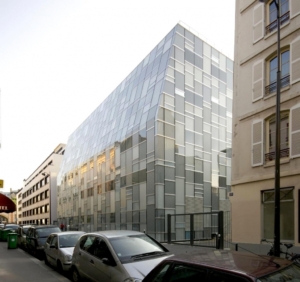 will also participate in the International Scientific Meeting “Understand, Preserve & Restore Vision”, taking place at the Institut de la Vision from 5–7 October 2026. Together, these events will provide valuable opportunities to connect research groups, exchange expertise, and foster new collaborations.
Download the Agenda of the second limits2vision Network Meeting in the “Internal Area“
Vision Camp 2027: Bringing Together the Next Generation of Vision Scientists
11–13 June 2027 | Castle Wildenstein, Leibertingen, Germany
The „Vision Camp“ is back.
In 2027 it will bring together PhD students and early-career researchers from across Europe for three days of scientific exchange, networking, and interdisciplinary learning in the inspiring setting of Castle Wildenstein in Leibertingen, Germany. Scheduled to take place from Friday, 11 June to Sunday, 13 June 2027, the conference continues a successful tradition that has fostered collaboration among young investigators in vision science since 2010.
Held at the historic Castle Wildenstein, Vision Camp offers a unique environment where doctoral researchers can present their work, engage in lively scientific discussions, and build lasting professional networks. The meeting is designed specifically for researchers at the PhD level, providing an informal yet highly stimulating atmosphere that encourages the exchange of ideas across disciplines.
The first limit2vision Vision Camp will be jointly organized by limits2vision-PhD students in collaboration with currently running Marie Skłodowska-Curie Doctoral Networks at the Institute for Ophthalmic Research in Tübingen and Institut de la Vision in Paris. The scientific programme will introduce participants to the full spectrum of vision science, spanning fundamental research in animal models through translational studies to clinical trials. This broad perspective will encourage interdisciplinary dialogue and provide young researchers with valuable insights into the diverse approaches that drive advances in vision research.
A central feature of Vision Camp is the opportunity for participants to present their own research projects and receive constructive feedback from peers and senior scientists. The conference also provides an excellent platform for establishing international collaborations and strengthening personal and professional networks within the European vision science community.
Participants will additionally have the opportunity to invite internationally renowned experts to deliver keynote lectures, offering inspiration and insights into cutting-edge developments in the field.
By combining outstanding science with an exceptional venue and a collaborative atmosphere, Vision Camp 2027 promises to be an inspiring experience for the next generation of vision researchers and an important milestone in strengthening the European vision science network.
Talk and Visit by Wei Li
On 16 July, Thomas Euler speaker of the limits2vision – iRTG is pleased to welcome Professor Wei Li, Dean of the SANS Institute for Neuroscience and Vision Research (SINVR) at Shanghai Jiao Tong University School of Medicine, for a lecture on the latest advances in visual neuroscience.
Professor Li’s presentation in Tübingen will provide insights into cutting-edge research at the intersection of neuroscience, metabolism, and vision. His work demonstrates how fundamental discoveries in neural circuits and physiological adaptation can inspire new approaches to understanding eye diseases and preserving visual function. His talk on „The biology of cone photoreceptors“, on Thurdsday 16 July, 4.15 p.m. , at the MV Lecture Hall (Institutes of Microbiology and Virology, Elfriede-Aulhorn-Str. 6, Tübingen) promises to be of broad interest to researchers working in neuroscience, ophthalmology, physiology, and translational medicine.
Professor Li is internationally recognized for his pioneering work on the neural mechanisms of vision. His research spans a remarkable range of topics, from retinal synapses and neural circuits to visual signal processing, retinal development, metabolism, and diseases affecting the visual system. By combining molecular, physiological, and systems-level approaches, his laboratory seeks to understand how the retina processes visual information in both healthy and diseased states.
Before joining Shanghai Jiao Tong University School of Medicine, Professor Li spent many years at the National Eye Institute (NEI) of the U.S. National Institutes of Health (NIH), where he served as Senior Investigator with tenure and Chief of the Retinal Neurobiology Section. During his distinguished career at NIH, he also held numerous leadership positions, contributing to scientific governance, research ethics, and collaborative initiatives that advanced translational biomedical research.
Beyond his scientific discoveries, Professor Li is a leading figure in the international vision research community. He currently serves as Chair of the FASEB Retinal Neurobiology and Visual Processing Conference and as a Trustee of the Association for Research in Vision and Ophthalmology (ARVO). In recognition of his scientific leadership, he has been elected ARVO Vice President for 2027. His many honors, including ARVO Fellow status and several prestigious international awards, reflect his outstanding contributions to vision science.
We are delighted to welcome Professor Wei Li to Tübingen and look forward to an inspiring scientific exchange.