Ce site utilise des cookies. En continuant à utiliser ce site, vous acceptez l'utilisation de cookies.
D'accord !PrivacyImprintNous pouvons demander que les cookies soient mis en place sur votre appareil. Nous utilisons des cookies pour nous faire savoir quand vous visitez nos sites Web, comment vous interagissez avec nous, pour enrichir votre expérience utilisateur, et pour personnaliser votre relation avec notre site Web.
Cliquez sur les différentes rubriques de la catégorie pour en savoir plus. Vous pouvez également modifier certaines de vos préférences. Notez que le blocage de certains types de cookies peut avoir une incidence sur votre expérience sur nos sites Web et les services que nous sommes en mesure d’offrir.
Ces cookies sont strictement nécessaires pour vous délivrer les services disponibles sur notre site et pour utiliser certaines de ses fonctionnalités.
Du fait que ces cookies sont absolument nécessaires au bon rendu du site, les refuser aura un impact sur la façon dont il fonctionne. Vous pouvez toujours bloquer ou effacer les cookies via les options de votre navigateur et forcer leur blocage sur ce site. Mais le message vous demandant de les accepter/refuser reviendra à chaque nouvelle visite sur notre site.
Nous respectons votre choix de refuser les cookies mais pour éviter de vous le demander à chaque page laissez nous en utiliser un pour mémoriser ce choix. Vous êtes libre de revenir sur ce choix quand vous voulez et le modifier pour améliorer votre expérience de navigation. Si vous refusez les cookies nous retirerons tous ceux issus de ce domaine.
Nous vous fournissons une liste de cookies déposés sur votre ordinateur via notre domaine, vous pouvez ainsi voir ce qui y est stocké. Pour des raisons de sécurité nous ne pouvons montrer ou afficher les cookies externes d’autres domaines. Ceux-ci sont accessibles via les options de votre navigateur.
Nous utilisons également différents services externes comme Google Webfonts, Google Maps, autres hébergeurs de vidéo. Depuis que ces FAI sont susceptibles de collecter des données personnelles comme votre adresse IP nous vous permettons de les bloquer ici. merci de prendre conscience que cela peut hautement réduire certaines fonctionnalités de notre site. Les changement seront appliqués après rechargement de la page.
Réglages des polices Google :
Réglages Google Map :
Réglages reCAPTCHA :
Intégrations de vidéo Vimeo et Youtube :
Vous pouvez lire plus de détails à propos des cookies et des paramètres de confidentialité sur notre Page Mentions Légales.
Privacy FR
Talk and Visit by Soile Nymark
We are delighted to have as next invited « Visiting Researcher » Soile Nymark from Tampere University in Finland. She will hold on October 28 at 9 a.m. in the HNO Lecture Hall in Tübingen, a presentation on: Biophysical signaling in the retinal pigment epithelium regulates photoreceptor renewal.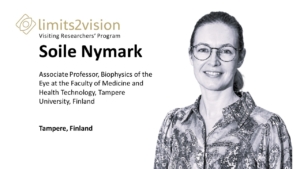
Soile Nymark is an Associate Professor at the Faculty of Medicine and Health Technology, at Tampere University, Finland. She received her PhD at Aalto University, Finland, studying adaptation mechanisms in retinal photoreceptors. She did her post-doctoral training at Boston University School of Medicine, USA, focusing on the retinal visual cycle. After returning to Finland, Dr. Nymark shifted her attention to the retinal pigment epithelium (RPE), the key retinal maintenance tissue, and began investigating its ion channel machinery. In 2016, Dr. Nymark started her own research group with the goal of understanding the multiple interactions between the retina and the RPE focusing on RPE ion channelome and related diseases. Her expertise covers electroretinography, single cell electrophysiology, calcium imaging, live-cell fluorescence microscopy, and different model systems including stem cell derived in vitro models, mice and zebrafish.
In her talk, she will highlight how the efficient uptake and clearance of aged photoreceptor outer segment tips are critical for photoreceptor health, with impairments linked to retinal degenerative diseases. This process is precisely regulated and relies on the intricate interaction between the retina and the RPE. Decades of research have illuminated this captivating and dynamic process, though its complex physiological regulation remains incompletely understood. Recent studies suggest that, beyond biochemical factors, biophysical players also have a critical role in governing the molecular mechanisms underlying outer segment uptake. The presentation discusses the latest findings on the biophysical determinants of the process, with particular emphasis on ionic signaling1,2,3,4 and cellular mechanics of the RPE5. Additionally, it introduces emerging approaches aimed at exploring this relatively under-investigated aspect of RPE physiology.
« limits2vision » PhD Students Recognised at International and National Conferences
We are delighted to share that several of our limits2vision PhD students have recently participated in international and national scientific meetings, and we are especially pleased to report that all participating students received either a prize or a travel grant in recognition of their contributions.
At the biennial ISER26 meeting in Valencia, Alexander Hirsch was awarded a travel grant for his oral presentation, “Glycolytic dysregulation in the rd10 mouse model.”
At the annual NeNa Conference for Young Neuroscientists, held in Würzburg from 16–18 September, three limits2vision PhD students received poster prizes. Katia Ihadadene received first prize, while Irene Biju and Anastasia Chikhladze jointly, since they got the same scoring received second prize.
Their contributions addressed different aspects of metabolism and retinal biology:
Irene Biju: “Single-cell multiplexed and targeted metabolic imaging of the retina”
Katia Ihadadene: “Impact of damaged Bruch’s membrane on RPE metabolism: metabolic analyses of in vitro iPS-RPE models”
Anastasia Chikhladze: “Investigating the effects of lifestyle-associated metabolic stress on iPSC-derived RPE cells”
These recognitions are a wonderful achievement, particularly at this early stage of their research careers, and reflect the high quality and scientific relevance of their work.
Congratulations to Alexander, Anastasia, Irene and Katia on these well-deserved achievements. And keep up the excellent work!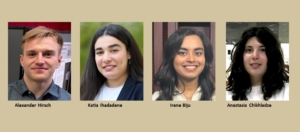
„limits2vision“ Scientists play a key role in PANDORA – A New Marie Skłodowska-Curie Doctoral Network
New perspectives for understanding and treating age-related macular degeneration
Scientists from the limits2vision network are strongly involved in PANDORA, a new Marie Skłodowska-Curie Doctoral Network funded by the European Union. Coordinated by the Institute for Ophthalmic Research (Tübingen University Hospital and the University of Tübingen), PANDORA brings together leading academic, clinical, and industrial partners across Europe, with strong participation from the Institut de la Vision in Paris (Sorbonne Université).
The network once again highlights the strength and impact of French-German collaboration in vision research. Among the principal investigators involved in PANDORA are Dr. Angela Armento and Dr. Florian Sennlaub, who are also active members of the limits2vision network. In addition, Prof. Marius Ueffing and Prof. Simon Clark, both limits2vision principal investigators, are actively involved in the PANDORA Doctoral Network.
At the heart of PANDORA is a major societal and medical challenge: age-related macular degeneration (AMD), one of the leading causes of irreversible vision loss in older adults. Affecting around 200 million people worldwide, AMD can profoundly impair central vision, independence, mobility, and quality of life, while creating growing challenges for healthcare systems in ageing societies.
PANDORA combines cutting-edge research with advanced international training for the next generation of scientists. Eight academic institutions, three industry partners, and two non-profit organisations will work together to deepen our understanding of the mechanisms underlying AMD and to develop innovative therapeutic strategies. The network will train 13 doctoral researchers in an international, interdisciplinary, and highly collaborative environment, bridging fundamen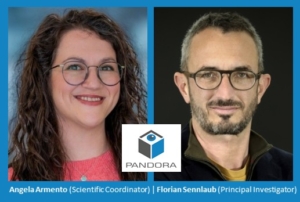 tal research and clinical translation.
“Our goal is to translate this knowledge into new therapeutic strategies that will ultimately benefit patients,” says Dr. Angela Armento, Scientific Coordinator of PANDORA.
The support of the Marie Skłodowska-Curie Actions not only strengthens European leadership in cutting-edge biomedical research, but also represents a major investment in the next generation of researchers and in tackling one of the most important health challenges of ageing societies.
The limits2vision community is proud to contribute to this new initiative and looks forward to joining forces with PANDORA to train and inspire the next generation of vision scientists.
Talk and Visit by Georgios Kafetzis
On Monday 12 October, the limits2vision – iRTG is pleased to welcome Dr Georgios Kafetzis, evolutionary neuroscientist in the group of Tom Baden at the University of Sussex, in Brighton (UK).
Dr Kafetzis presentation in Paris will be on „Of Sharks and Mice: Evolutionary Origin of Vertebrate Visual Circuits“, on Monday 12 October, 12 a.m. – 1 p.m. , at the Institut de la Vision (17 Rue Moreau, 75012 Paris, France).
Georgios Kafetzis is a visual neuroscientist at the University of Sussex working on the principles that shape the organization, function and evolution of visual systems. His research explores how retinal circuits transform visual signals into meaningful neural representations, combining experimental approaches in retinal neuroscience with evolutionary and computational perspectives.
Second Network Meeting on 8 – 9 October 2026 in Paris
The second limits2vision Network Meeting will take place on 8 – 9 October 2026 at the Institut de la Vision in Paris. Following the successful inaugural meeting at the Institut Culturel Franco-Allemand (ICFA) in Tübingen, the event will bring again together researchers from the Tübingen and Paris institutes, alongside the limits2vision PhD students.
The meeting will focus on scientific exchange, especially on PhD Students reporting, the development of new collaborations, and the further strengthening of Franco-German research in vision science. It will be followed by several days of specialized training for the PhD students.
The Network Meeting follows a broader programme of scientific exchange in Paris. Many limits2vision Principal Investigators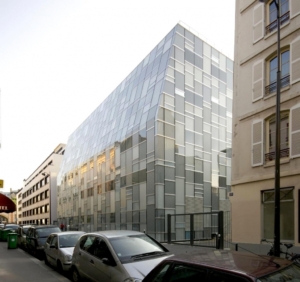 will also participate in the International Scientific Meeting “Understand, Preserve & Restore Vision”, taking place at the Institut de la Vision from 5–7 October 2026. Together, these events will provide valuable opportunities to connect research groups, exchange expertise, and foster new collaborations.
Download the Agenda of the second limits2vision Network Meeting in the « Internal Area«