Talk and Visit by Christian Damsgaard
We are delighted to launch our “Visiting Researchers” program with Christian Damsgaard, Associate Professor in the Department of Biology, Zoophysiology at Aarhus University in Denmark.
On Tuesday 12 May at 2 p.m., Damsgaard will give a talk on « The anaerobic metabolic ecosystem of the bird eye » in the HNO Lecture Hall at the Institute for Ophthalmic Research in Tübingen. He will also be available for discussions and lab visits. Save the date!
Prof. Dams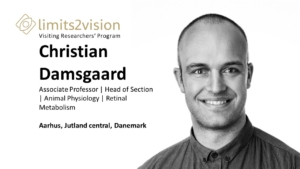 gaard is a comparative and evolutionary physiologist who investigates the mechanisms of gas exchange in vertebrates, particularly in relation to acid–base regulation and neural function. Using the retina as a model system, he combines cardiorespiratory and electrophysiological techniques with OMICs approaches to study how oxygen diffusion shapes metabolism and tissue function across spatial gradients. His work integrates phylogenetically informed, multi-species methods to reveal how respiratory systems and their physiological trade-offs have evolved over macroevolutionary timescales.
Prof. Damsgaard’s most recent publication is highly relevant to the questions addressed in the limits2vision programme: Damsgaard C, et al., Oxygen-free metabolism in the bird inner retina supported by the pecten. Nature, 650: 657–663, 2026. doi:10.1038/s41586-025-09978-W. PMID: 41565811.
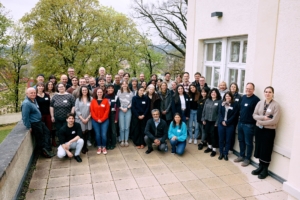 Les partenariats noués ces dernières années entre Tübingen et Paris ont déjà connu un succès remarquable. Le groupe international de formation à la recherche « limits2vision » a été financé par la Fondation allemande pour la recherche (DFG) et reconnu comme particulièrement exemplaire. Le projet bénéficie également du soutien de l’Université franco-allemande (DFH), ce qui souligne l’excellence scientifique et la pertinence stratégique de cette initiative transfrontalière. Toutefois, la mise en place, du côté français, d’un mécanisme de financement comparable à celui du DFG-iRTG offrirait une base bien plus solide pour des initiatives de recherche conjointes durables et favoriserait des liens culturels plus étroits entre les jeunes chercheurs français et allemands que ce qui est actuellement possible.