Vision Camp 2027: Bringing Together the Next Generation of Vision Scientists
11–13 June 2027 | Castle Wildenstein, Leibertingen, Germany
The „Vision Camp“ is back.
In 2027 it will bring together PhD students and early-career researchers from across Europe for three days of scientific exchange, networking, and interdisciplinary learning in the inspiring setting of Castle Wildenstein in Leibertingen, Germany. Scheduled to take place from Friday, 11 June to Sunday, 13 June 2027, the conference continues a successful tradition that has fostered collaboration among young investigators in vision science since 2010.
Held at the historic Castle Wildenstein, Vision Camp offers a unique environment where doctoral researchers can present their work, engage in lively scientific discussions, and build lasting professional networks. The meeting is designed specifically for researchers at the PhD level, providing an informal yet highly stimulating atmosphere that encourages the exchange of ideas across disciplines.
The first limit2vision Vision Camp will be jointly organized by limits2vision-PhD students in collaboration with currently running Marie Skłodowska-Curie Doctoral Networks at the Institute for Ophthalmic Research in Tübingen and Institut de la Vision in Paris. The scientific programme will introduce participants to the full spectrum of vision science, spanning fundamental research in animal models through translational studies to clinical trials. This broad perspective will encourage interdisciplinary dialogue and provide young researchers with valuable insights into the diverse approaches that drive advances in vision research.
A central feature of Vision Camp is the opportunity for participants to present their own research projects and receive constructive feedback from peers and senior scientists. The conference also provides an excellent platform for establishing international collaborations and strengthening personal and professional networks within the European vision science community.
Participants will additionally have the opportunity to invite internationally renowned experts to deliver keynote lectures, offering inspiration and insights into cutting-edge developments in the field.
By combining outstanding science with an exceptional venue and a collaborative atmosphere, Vision Camp 2027 promises to be an inspiring experience for the next generation of vision researchers and an important milestone in strengthening the European vision science network.
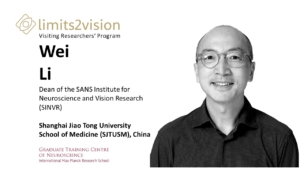 One of Professor Li’s most distinctive research interests lies in the biology of hibernation. Using ground squirrels as a unique experimental model, his team investigates how the visual system adapts to the profound metabolic changes that occur during hibernation. This innovative work has revealed fundamental mechanisms that link metabolism, neuronal resilience, and tissue health, opening new avenues for understanding—and ultimately treating—visual system disorders and neurodegenerative diseases.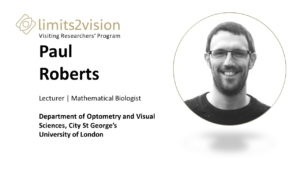
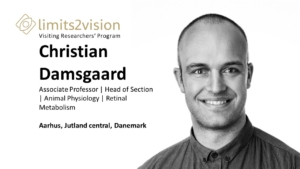 gaard is a comparative and evolutionary physiologist who investigates the mechanisms of gas exchange in vertebrates, particularly in relation to acid–base regulation and neural function. Using the retina as a model system, he combines cardiorespiratory and electrophysiological techniques with OMICs approaches to study how oxygen diffusion shapes metabolism and tissue function across spatial gradients. His work integrates phylogenetically informed, multi-species methods to reveal how respiratory systems and their physiological trade-offs have evolved over macroevolutionary timescales.