Few impressions from the First Network Meeting
“Establishing a doctoral network sends a strong signal for building a long-term Franco-German partnership between two of Europe’s leading institutes in ophthalmology research” emphasized Dr. Marie-Léa Rousseau in reference to the limits2vision programme.
Dr. Rousseau, Science and Technology Attachée at the French Embassy in Germany, was invited to participate in the first limits2vision meeting in Tübingen. Her presence provided an opportunity for further reflection on the expansion and consolidation of a long-term cooperation.
This binational scientific event gained additional significance through its venue at the Institut Culturel Franco-Allemand in Tübingen, a setting that clearly underscores the programme’s Franco-German dimension. Dr. Thomas Vautravers, Director of the Institut Culturel Franco-Allemand, welcomed participants and highlighted the institute’s role as a hub for bilateral exchange.
Held on April 13–14, 2026, the me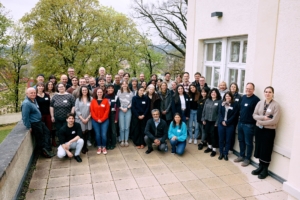 eting brought together leading scientists from Germany and France to explore key mechanisms of visual perception, discuss the PhD students’ research projects, and shape their training and supervision. The overarching aim is to identify synergies among participating research groups, initiate new joint projects, and foster sustainable international networking.
The partnerships established in recent years between Tübingen and Paris have already achieved remarkable success. The International Research Training Group “limits2vision” has been funded by the German Research Foundation (DFG) and recognized as particularly exemplary. The project is also supported by the Franco-German University (DFH), underscoring the scientific excellence and strategic relevance of this cross-border initiative. However, establishing a funding mechanism on the French side comparable to the DFG-iRTG would provide a far more robust foundation for sustained joint research initiatives and foster deeper cultural ties among early-career researchers from France and Germany than is currently possible.
 m addresses the fundamental question of how the retina maintains high performance at the limits of its biological capacity. The scientific programme of the meeting will place particular emphasis on contributions from the early-career researchers, highlighting innovative approaches and emerging perspectives in the field.
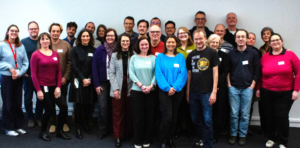 The 1st Network Meeting of the complete consortium with all PhD students will take place in April in Tübingen. This event will mark an important milestone for the young researchers, who will meet their respective French or German fellows for the first time, present the outlines of their individual research projects, and engage in the first series of workshops and training courses. Beyond the scientific program, this meeting will also foster early collaboration, strengthen the sense of belonging to the consortium, and lay the groundwork for future interdisciplinary exchanges.
 At the heart of this international PhD program is the retina – a highly complex neural tissue in the eye responsible for processing visual information and transmitting it to the brain. With over 100 distinct cell types and one of the highest energy demands in the human body, the retina is a fascinating biological system – powerful yet vulnerable. The goal of limits2vision is to decipher the mechanisms that enable the retina to maintain its delicate balance between intense energy consumption and visual processing. “We are faced with the paradox that the human retina can function robustly for around 100 years yet degenerates rapidly in the presence of certain genetic mutations” explains Thomas Euler (University of Tübingen), spokesperson for the program. “Advancing our understanding of this balance provides a critical foundation for developing new therapies for retinal disorders, the majority of which are still incurable”.